


Hydro Jetting vs. Traditional Drain Snaking: Which Works Better?
Both methods clear clogs, but they work differently and suit different problems. Here’s how to know which one your drain or sewer line actually needs.
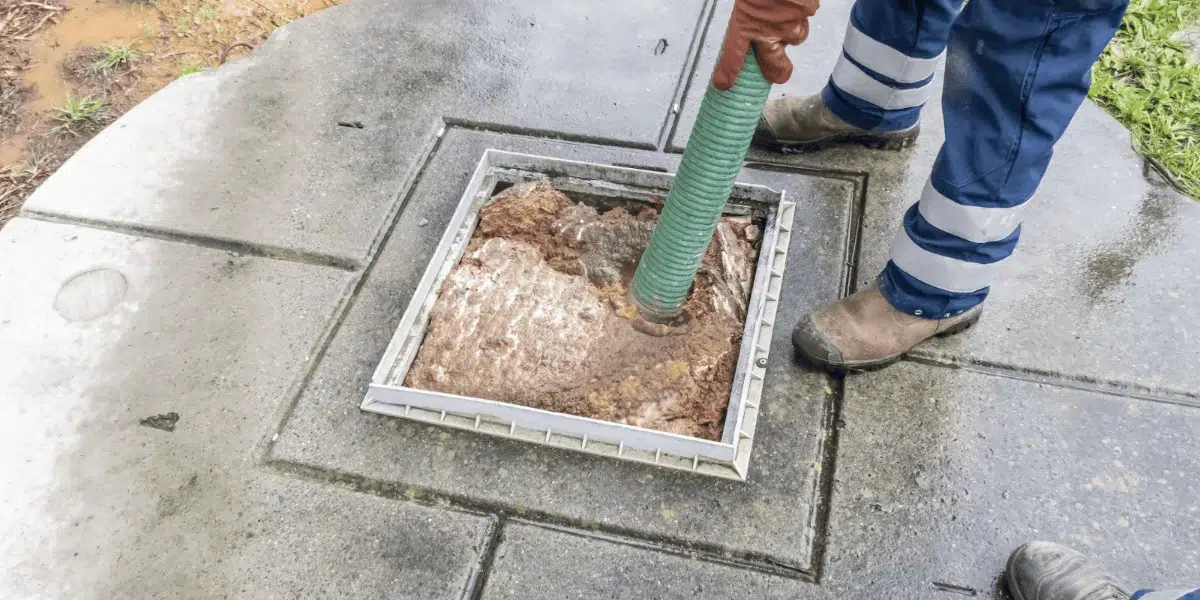
Every restaurant kitchen produces fats, oils, and grease as a natural byproduct of cooking. That material has to go somewhere, and a grease trap is what stands between it and the municipal sewer or septic system that would otherwise receive it in quantities those systems aren’t designed to handle. When the trap is cleaned on a regular schedule, it does its job quietly and without incident. When it isn’t, the consequences show up fast and in ways that affect every part of kitchen operations.
Understanding what actually happens inside a neglected grease trap, what the warning signs look like before things get serious, and what consistent maintenance actually prevents gives food service operators in San Saba County a practical framework for managing one of the most overlooked maintenance items in commercial kitchen operations.
A grease trap operates on a simple principle: fats, oils, and grease are less dense than water, so they float. Wastewater from the kitchen enters the trap, slows down, and the grease layer rises to the top while the water continues to drain. The trap holds the accumulated grease until it’s pumped out, preventing it from entering the drainage system downstream.
The filling process is continuous and unavoidable. Every dish washing cycle, every pot of cooking oil that gets rinsed, every cutting board cleaned after meat prep adds to the accumulation. In an active commercial kitchen, that adds up faster than most operators expect, which is exactly why the cleaning schedule exists.
Fun Fact: The “25 percent rule” is a common industry guideline suggesting that a grease trap should be cleaned when the combined depth of grease and solids reaches 25 percent of the trap’s total liquid depth, because beyond that threshold, the trap’s ability to separate grease from outgoing water declines significantly and FOG begins escaping into the downstream plumbing.
A trap that fills to capacity and beyond doesn’t simply stop working. It reverses its function. Instead of catching grease before it reaches the drain system, it becomes a vessel that allows accumulated grease to flow out with every additional wastewater discharge, coating the downstream pipes with exactly the material it was meant to prevent from getting there.
When grease trap cleaning is deferred past the appropriate service interval, several things happen simultaneously inside the trap that compound the problem with each passing week.
The grease layer at the top thickens. As it thickens, it hardens into a dense, waxy mat that becomes significantly harder to remove than fresh grease would have been. The solids layer at the bottom, food particles and organic debris, deepens and compresses. The effective liquid capacity of the trap shrinks as both layers expand inward from opposite directions.
Quick Fact: As grease and organic material in an overfull trap decomposes, anaerobic bacteria produce hydrogen sulfide gas, which is both the source of the distinctive sewage-egg odor associated with neglected grease traps and a corrosive compound that over time degrades the trap’s structure from the inside, shortening its functional lifespan.
The decomposition process is what elevates a full grease trap from a drainage problem to a health and safety concern. The gases produced by decomposing FOG don’t stay contained in the trap. They migrate through the drain lines and emerge at kitchen floor drains, sink drains, and anywhere else the drainage system has an opening, creating odor problems throughout the kitchen that no amount of cleaning or air freshener addresses because the source is underground.
The progression from a trap that needs service to one that’s causing active problems follows a recognizable pattern. Recognizing the early signs gives operators the chance to schedule service before the situation escalates.
| Warning Sign | What It Indicates | Urgency |
|---|---|---|
| Slow-draining sinks in the kitchen | Grease buildup reducing flow in drain lines | Service soon |
| Gurgling sounds from floor drains | Partial blockage restricting flow | Service soon |
| Sewage or rotten egg odor in kitchen | Decomposing FOG gases escaping through drains | Service promptly |
| Grease visible in the drain lines | Trap at or past capacity, grease escaping | Service immediately |
| Sewage backup at floor drains | Drain lines fully or severely blocked | Emergency service |
| Health inspector citation related to drains | Visible grease or odor conditions noted | Emergency service |
The first two signs, slow drains and gurgling, are the ones that give operators the most options. At that stage, a standard cleaning service resolves the issue. By the time odors are consistently present throughout the kitchen, the trap is past capacity and the drain lines likely have significant grease coating that may require jetting to clear in addition to the trap pump out.
A grease trap that isn’t cleaned regularly doesn’t just fail as a trap. It becomes a source of ongoing drain line contamination that creates problems downstream from the trap itself.
Grease that escapes the trap coats the interior walls of drain pipes as it moves through the system. Unlike water, which flows through cleanly, grease adheres to pipe walls and accumulates over time. Each deposit catches the next, and the effective diameter of the pipe gradually narrows until flow restriction becomes severe. In a busy kitchen, this process moves faster than in a residential setting because the volume of FOG-laden wastewater is dramatically higher.
Fast Fact: Grease that has hardened in drain lines below a restaurant requires high-pressure jetting to clear effectively, because the material has bonded to the pipe walls and standard drain cleaning methods don’t dislodge it. A kitchen that defers grease trap cleaning long enough typically ends up paying for both a trap pump out and a line jetting in the same service call, at significantly more than either service would have cost separately.
For food service businesses in Texas, grease trap maintenance isn’t only a plumbing concern. It intersects with health code compliance in ways that make it an operational and legal issue. Health inspectors who observe slow drains, grease in visible drain areas, or kitchen odors that suggest a drainage problem have cause to document violations and require corrective action.
A kitchen that has to be taken out of service for emergency drain work during operating hours, or that receives health code citations that affect its inspection grade, faces costs that go well beyond the service call itself. Lost revenue during a shutdown, the reputational effect of a visible health citation, and the emergency pricing that comes with any urgent service call all make deferred maintenance expensive in ways that a regular cleaning schedule simply doesn’t.
The appropriate grease trap cleaning frequency for a specific operation depends on the trap’s size, the volume of the kitchen’s output, and the type of cooking being done. A high-volume fry operation generates more FOG per service than a salad-focused kitchen of the same size. A trap that’s correctly sized for the operation and cleaned on the right schedule stays well within its functional range and never creates the problems a neglected one does.
Many Texas municipalities and water districts specify minimum cleaning frequencies as part of their commercial kitchen permitting requirements. Understanding what the applicable local requirements are and setting a service schedule that meets or exceeds them keeps a kitchen in compliance and prevents the issues a neglected trap creates.
The most practical starting point for any operator who isn’t sure whether their current cleaning schedule is appropriate is to have the trap inspected and serviced, note the condition it’s found in, and use that observation to calibrate the right interval going forward. A trap found in good condition at a twelve-month interval suggests that schedule is working. One found severely overloaded at the same interval suggests the frequency needs to increase.
A consistent grease trap cleaning schedule is one of the lowest-cost ways a food service operation can protect its kitchen from the drain problems, odors, and health code risks that a neglected trap creates.
Juice’s Septic & Grease Pumping provides professional grease trap pumping and cleaning services throughout San Saba County and the surrounding area, with the equipment and experience to handle commercial trap service on a schedule that keeps kitchens operating without interruption.
Contact Juice’s Septic & Grease Pumping today to schedule service or discuss the right maintenance interval for your operation.